
Whenever I talk about building customer empathy with engineers, or with any analytical business person, they wrinkle their noses like I’ve got something noxious stuck to the bottom of my shoe. And I don’t blame them – human beings are messy, unpredictable and confusing. Yet understanding why customers do the things they do is the secret to developing solutions that deliver real value, the kind of value your customers will tell their friends about.
Empathy Guides a Digital Transformation
This is especially important if a business is transforming their operations and service offerings to digital platforms. A human being who is working with customers, though their approach may be inconsistent and inefficient, can adjust quickly to ensure the service meets the customer’s needs. As humans, your employees have empathy built in and most likely care about making your customers happy. So they will listen and use empathy to their advantage. Not so much with a digital service.
As you transform your organization to use digital platforms, your best strategy is to use customer empathy to guide the design of these solutions. Even if you are digitizing an internal operation, each solution has a user, and knowing how that user thinks and feels about the task they are attempting to achieve will make the difference between a winner and a flop.
How to Develop Customer Empathy
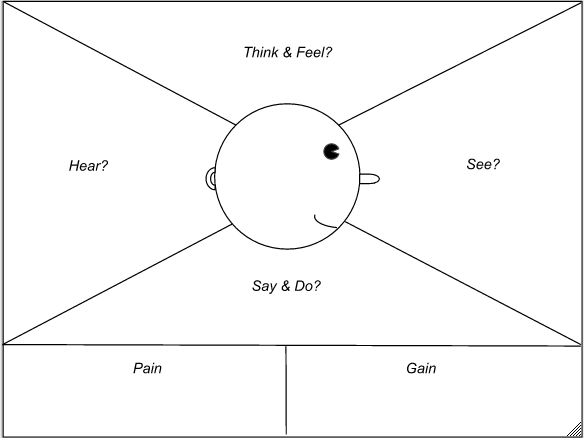
Alex Osterwalder of Strategyzer.com was the founder of the empathy map (although ethnographers were using this methodology long before he created this great visual representation). The empathy map looks at the task that your customer is using your solution for, and pictures how it works for them from your customer’s perspective.
Want more innovation tips? Click here to subscribe to our weekly blog, sent directly to your inbox.
After your team completes your customer interviews, bring them together to fill out this empathy map for a couple of different types of customers. For example, you might have customers that are early technology adopters and those that are technophobes. Or you might have those that like handholding and those that like to do things themselves. For each type of customer, put them at the center of this map and answer the following questions, focusing on their current perspective:
- How do they think and feel about their task? How do they feel your solution helps them achieve their task? Where does it get in the way?
- What do they see while using your solution? What other pieces of the ecosystem are involved in completing their task? What alternatives are available to them?
- What do they hear from their colleagues, friends and neighbors about you and the way they are using your solution? What do their friends say about your competitors?
- What do they say and do with your solution? Are they using it in a way that is different from how you envisioned? What do they say when they have successfully completed their task?
The answers to these questions form the complete view of your customer’s task, and provide a picture of how well you are helping them, looked at from their perspective. If you are thinking of digitizing part of your solution, you will want to replicate the successful feelings they get from their current engagement with you – their gains. And you will want to alleviate the pains and work arounds they encounter.
Tell us what you think. How have you used empathy to design your digital transformation?